

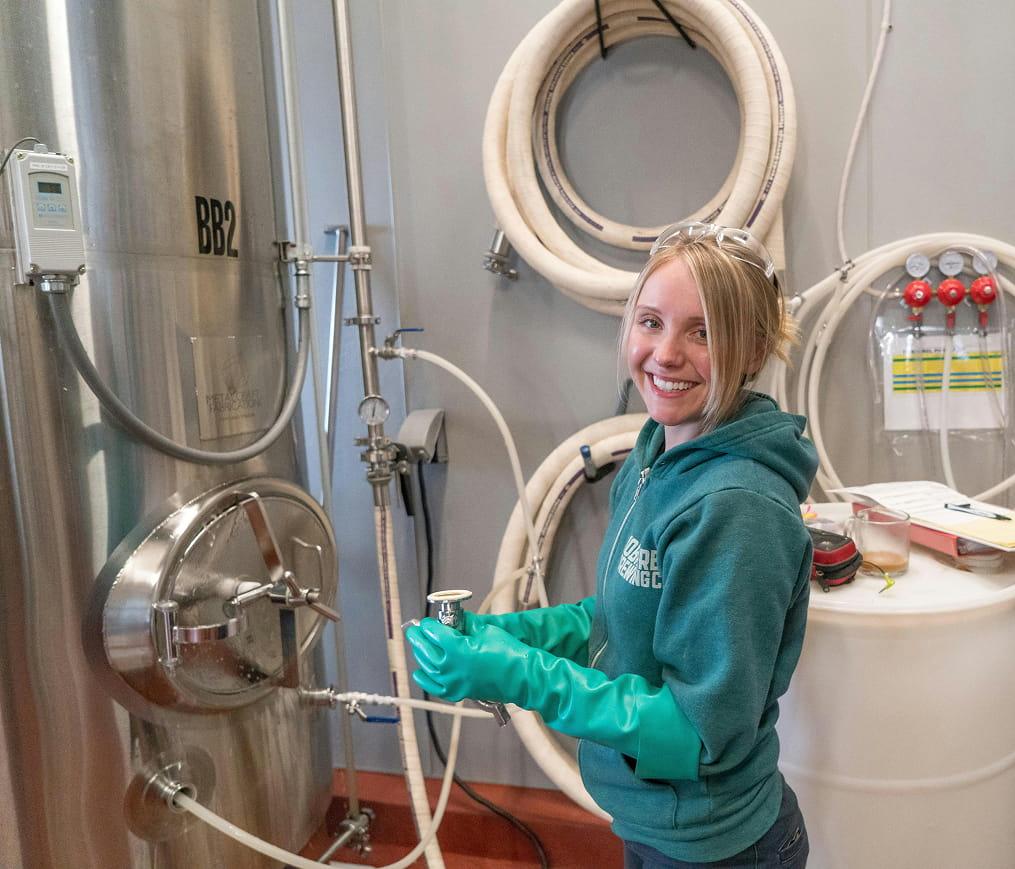
Across Europe, the brewing, distilling and winemaking sectors are facing increasing skills shortages. Breweries, distilleries and wineries often report difficulty finding people with the technical, production and leadership skills needed for competitive and sustainable growth. While this challenge is often discussed in economic or technical terms, it also has a clear gender dimension.
Gender Gaps in the Labour Market
Women in Europe continue to face structural gaps in employment, progression and representation. According to Eurostat, although the employment gap between women and men has narrowed in recent years, women remain underrepresented in senior and technical roles, and part-time work and caregiving remain significant factors in career patterns for women. The gender pay gap also persists across the EU, with women on average earning less than men — a reflection of occupational segregation and differences in career progression.
These broader labour market trends matter for drinks sectors such as brewing and winemaking because they operate within production and manufacturing environments where technical skills, career progression and leadership are critical. Persistent gaps in representation can limit who is seen as “industry talent” and who gets access to technical training or promotion opportunities.
Gender Gaps Within the Drinks Industry
Evidence from industry studies points to slow progress in inclusion. A global DE&I study from Women of the Vine & Spirits, published with Deloitte, found that only a small share of women feel there has been significant positive change in the beverage alcohol industry in recent years.
Specific sector research also highlights ongoing barriers in wine: surveys indicate that a high proportion of women report sexism, bias and even harassment in the wine trade, and many have considered leaving the sector as a result. In one study, about 78 % of respondents felt gender bias and harassment were serious issues, and 44 % said they had considered leaving because of these conditions.
While comprehensive EU-wide statistics on women’s representation in brewing, distilling and winemaking are limited, narrower studies suggest very low representation of women in technical roles in beer: in some craft beer environments only a tiny fraction of brewers are women, and less than a quarter of management roles are filled by women.
Why This Matters for Skills and Growth
Skills shortages and gender gaps are connected. When production and technical roles are not fully open or visible to women — whether because of limited access to training, unclear progression pathways, or workplace cultures that have not evolved — the industry loses potential talent.
At the same time, the drinks sector itself is undergoing change. Sustainability, innovation and quality demands require new competencies and flexible skill development. Businesses with more inclusive training and career pathways are better placed to attract and retain talent from a wider pool. Inclusive environments also tend to have better employee retention and stronger internal networks — both vital in sectors where experienced technical staff are in short supply.
Moving Forward
Addressing skills shortages in the drinks industry therefore means addressing inclusion as part of workforce development. Supporting women with access to technical training, leadership development and clearer progression pathways helps to stabilise the workforce and enrich the sector’s talent pipeline. Initiatives like VINTA aim to respond to these challenges by combining research, vocational education, digital learning and employer engagement to make skills development more inclusive and effective.
By linking deeper understanding with practical solutions, the industry can begin to reduce both skills gaps and gender gaps — strengthening opportunities for women and building a more resilient future for the brewing, distilling and winemaking sectors.